Software Quality and Security Review Service
Rescue My Code is Nullwest's AI-powered codebase x-ray: a seven-vector analysis covering security, performance, and knowledge-ownership risk, reported in plain business language managers can act on.
About Rescue My Code
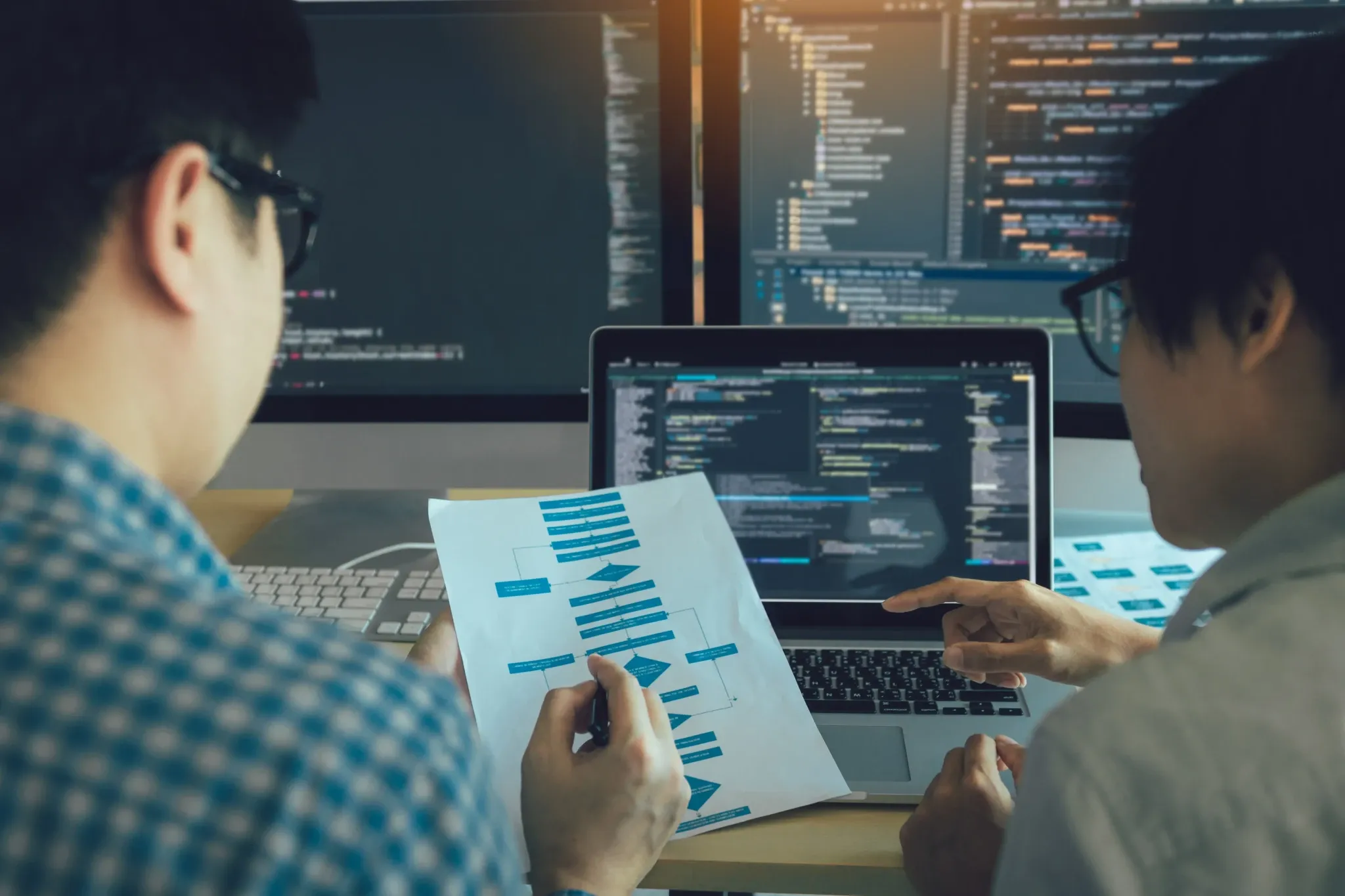
Rescue My Code is Nullwest's own product — an AI-powered x-ray for software. It combines AI models with custom analysis code to sweep an entire codebase and answer the questions owners actually have: where the problems are, where the opportunities are, and whether the team building it is set up to succeed.
It was built for the people who own the consequences of software, not just the people who write it. A proprietary reporting layer translates every finding into plain business terms a manager can act on. And because the findings get presented to founders and CTOs as grounds for real decisions — what to fix, what to fund, who to hire — the analysis has to be right, every time.
What we did
Scott and Dave built Rescue My Code at Nullwest as a product, not a one-off consulting deliverable. Every engagement runs the same engine:
- A seven-vector codebase analysis: security vulnerabilities, redundant code, slow code and performance concerns, version control and dependency hygiene, engineer output over time, who is committing what, and a map of which engineers own which areas of the codebase - Knowledge-fragility assessment — the ownership map shows where a single departure would take critical knowledge out the door - Cross-model verification — code is never reviewed by the same AI model that wrote it; multiple models plus custom tooling check each other's work - Manager-facing reporting that explains software complications in non-technical terms, ready to present to a board, a leadership team, or a skeptical founder
The deliverable isn't just a report — it includes guidance the client's own team can execute, including how to use Claude and other AI tools to fix what was found. That's the Nullwest principle of capability over dependency, built into a product.
The hard parts (and how we handled them)
An AI grading its own homework is not a code review. A founder came to Rescue My Code through a referral, confident in her vibe-coded application and in the model that wrote it — she expected the scan to find little, especially if it used the same AI she'd been using. That expectation is exactly the problem: a model reviewing its own output tends to bless it. Rescue My Code deliberately runs different models against the code, layered with custom analysis. The x-ray found critical security flaws in an application that was otherwise well-structured — flaws the founder acknowledged, because she'd half-noticed some of them herself.
Executives don't read stack traces. Most audits die in translation between the engineering team and the people who control the budget. Rescue My Code's proprietary reporting system was built to close that gap: every finding is explained in business terms — what it is, what it risks, why it should be fixed. For one 15-year-old software company, the CTO used the output directly as third-party presentation material for his own team: these are the things that need to be fixed, and this is why.
Your codebase is also a map of who can leave. Code risk isn't only in the code. Rescue My Code analyzes commit history to show which engineers own which parts of the system and how concentrated that knowledge is — so leadership can see, before a resignation letter arrives, exactly how fragile the business is.
The outcome
Rescue My Code has now run across very different kinds of software. For Artist Tracker, a vibe-coded product, the scan assessed how the code was actually performing and produced a complete business and technical guidance document — including pricing and early monetization strategy — to take the product from zero to one. For F Sharp, a 15-year-old software company, it audited the entire codebase for security and performance and gave the CTO clear, defensible material to bring actionable fixes back to his team. For Reroot, a marketplace connecting buyers with local farmers, it caught critical security flaws before launch — and came with advice on how the founder could fix them herself using Claude and other tools. [Optional: client quote or hard metrics here — e.g., the published Image One USA results: $120k hosting savings, 20x page loads, 4,000 hours of bug-fixing recovered]
Sitting on software you can't fully see into — whether it was vibe-coded last month or built fifteen years ago? Rescue My Code was built by the Nullwest founders — engineers who shipped production systems for Spotify, Vice, Intel, and Apple and were founding engineers at Xembly — to give owners an honest picture and a path forward. Let's talk about yours.