Dementia Diagnostics Platform
Nullwest audited and rebuilt BrainDoc's medical diagnostics platform — closing security holes, raising AI transcription accuracy from 60% to 90%+, and fixing 74 bugs — turning a fragile prototype into a demo-ready product.
About BrainDoc
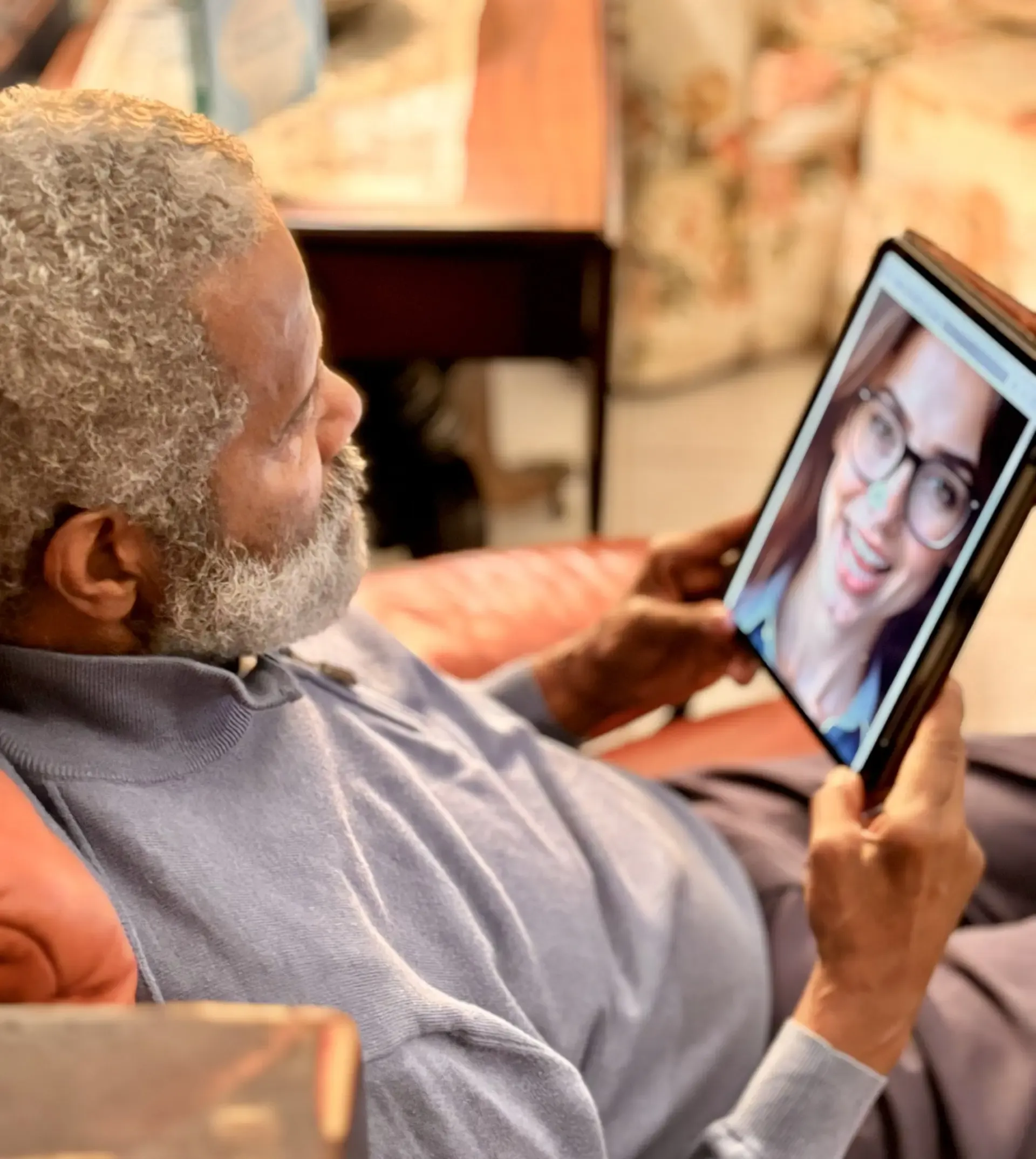
BrainDoc (braindoc.com), founded by Dr. Mitch and Dr. Emily Clionsky, is a proprietary computerized diagnostics and report-generation platform that helps clinicians make better decisions about patient care. It translates complex medical, neurological, and psychological concepts into practical tools — a patient takes a guided, video-driven cognitive assessment, the platform transcribes and scores their spoken responses, and the clinician gets a report they can act on.
That workflow puts software in the middle of a clinical decision. A scoring error isn't a bug ticket — it's a wrong number in front of a doctor. The platform had to be accurate, secure, and dependable every single time.
What we did
BrainDoc came to Nullwest with an inherited five-layer Next.js application on Vercel — and a sense that it wasn't ready for what came next. Before changing a line, Nullwest ran an x-ray audit of the full system: architecture, scalability limits, and risk. The audit found transcription accuracy around 60%, authentication holes, proprietary scoring logic exposed in the frontend, and patient reports reachable as unauthenticated PDF files.
Then Nullwest fixed it, end to end:
- Security overhaul — authentication on the AssemblyAI token, Stripe session, and PDF report endpoints; fixed cross-user tampering in answer results; removed PII and transcripts from logs; added prompt-injection defenses on user transcripts and rate limiting on token and AI endpoints. - AI scoring rebuilt — rewrote scoring prompts, added Zod schema validation with mocked unit tests in CI, and validated word recognition against 500 AI-generated voice responses via a headless-Chrome test harness. Accuracy went from ~60% to 90%+. - Smarter model economics — re-routed scoring through OpenRouter to a smaller, better-performing model, cutting per-test AI cost without sacrificing quality. - Infrastructure migration — moved hosting from Vercel to AWS for stability, lower cost, and room to scale. - Reporting consolidated — replaced 30 separate PDF reports with a single HTML-generated report (printable to PDF), collapsing thirty maintenance surfaces into one. - 74 bugs fixed across the platform, plus performance work (video prefetch/preload) and code-quality hardening throughout.
Audit, security, AI, infrastructure, and product polish — one engagement, one partner. That range is exactly what Nullwest was founded to deliver.
The hard parts (and how we handled them)
A diagnostic tool that's wrong 40% of the time isn't a diagnostic tool. Transcription accuracy of ~60% meant nearly half of patients' spoken responses could be misread before scoring even began. Nullwest didn't just swap models and hope — they rewrote the scoring prompts, added Zod schema validation on every AI response so silent failures became impossible, and built a headless-Chrome test harness that validated recognition against 500 AI-generated voice responses. Accuracy rose past 90%, and the test harness means it stays measurable, not anecdotal.
Medical software does not get to leak. Patient reports were sitting in unauthenticated PDFs, PII was landing in logs, and core scoring logic lived in the frontend where anyone could inspect it. Nullwest locked authentication around every sensitive endpoint, fixed cross-user tampering, scrubbed PII from logging, and added prompt-injection defenses — treating a health platform like the regulated-adjacent product it is, before anyone forced the issue.
Inherited code is a liability until someone proves otherwise. The Clionskys had a working prototype but no independent picture of what they actually owned. Nullwest's x-ray audit came first — mapping the architecture and its limits before touching it — so every subsequent decision (AWS migration, model re-routing, report consolidation) traced back to a documented business reason: stability, cost, and the ability to scale. The founders ended the engagement understanding their own platform, not more dependent on the people who fixed it.
The outcome
Every SOW item delivered, 74 bugs fixed, transcription accuracy up from ~60% to 90%+ — plus work shipped at no extra cost, including items explicitly excluded from the SOW: the full PDF-to-HTML report redesign, sectioned scoring, UI cleanup across the site, 14 additional bug fixes, and the 500-response voice test harness. When a few late nav bugs surfaced outside Phase 2 scope, Nullwest fixed those free too.
The founders' own words tell it best: "I got two perfectly correct scores in a row. This has never happened before," said Dr. Mitch Clionsky — who described being ecstatic the first time the program ran end to end, produced the right score, and delivered the right report. BrainDoc now has a platform its founders can confidently demo to clinicians and investors alike.
Inherited a codebase you're not sure you can trust — or an AI product that isn't accurate enough to bet on? Nullwest's founders have been auditing, securing, and shipping production AI systems from Apple to Xembly to platforms like BrainDoc. Let's talk about yours.